

Cloud Resilience & Business Continuity
Protect Your Business from Major Cloud Disruptions
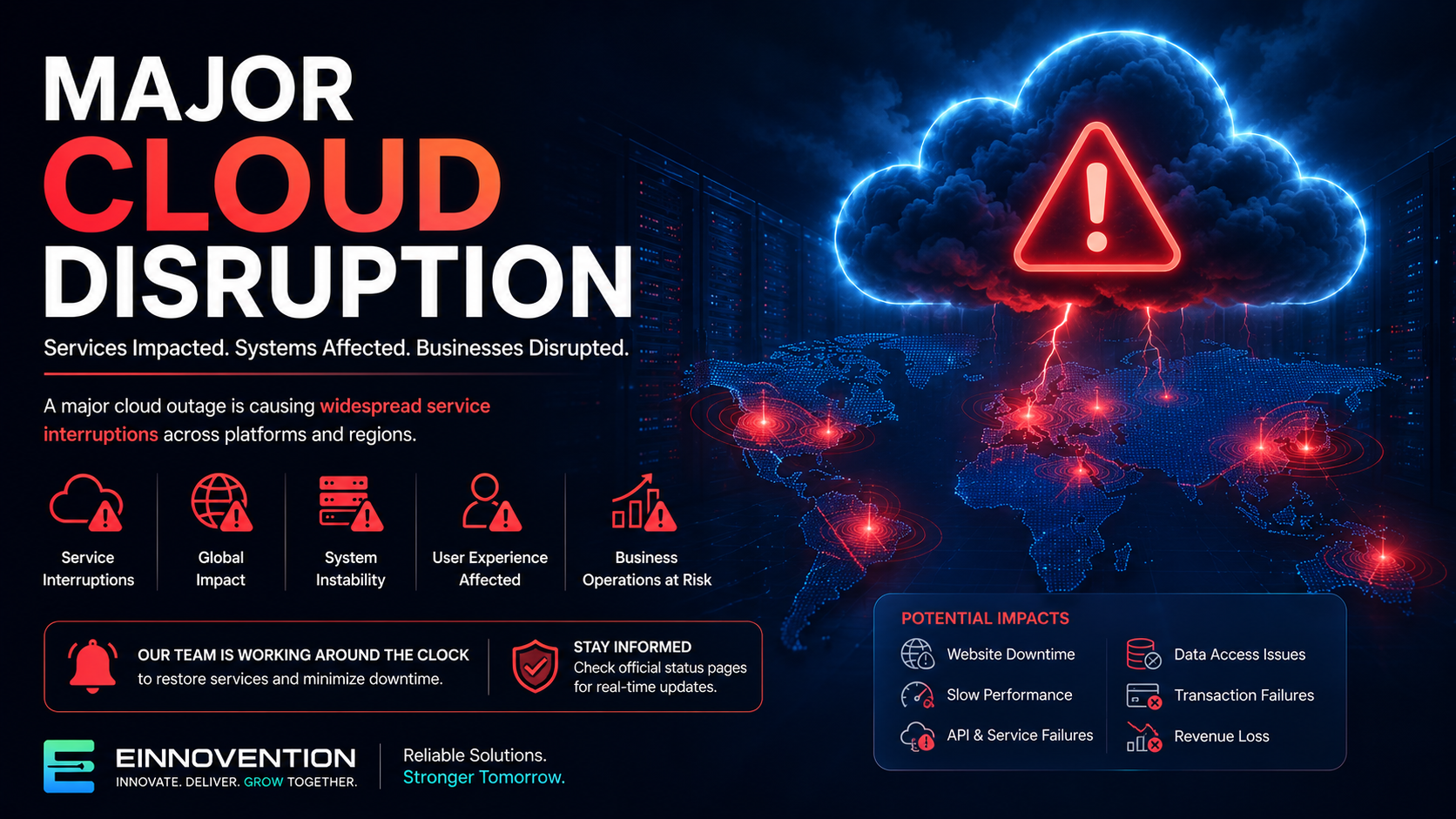
Cloud technology powers modern businesses, but even the most reliable cloud platforms can experience unexpected outages, cyberattacks, infrastructure failures, or service interruptions. A major cloud disruption can impact operations, customer experiences, revenue, and business reputation. Building a resilient cloud strategy with disaster recovery, high availability, backup systems, and proactive monitoring helps organizations minimize downtime and maintain uninterrupted business operations.
Understanding Major Cloud Disruptions
Cloud disruptions occur when critical cloud services become unavailable or experience degraded performance. These incidents may result from infrastructure failures, software bugs, cyber threats, network outages, configuration errors, natural disasters, or third-party service failures.
Without a resilient cloud architecture, businesses may experience service interruptions, data loss, productivity declines, financial losses, and customer dissatisfaction. Preparing for these scenarios is essential for maintaining business continuity.
Business Continuity
Keep essential business services running even during unexpected cloud outages.
Disaster Recovery
Restore applications, systems, and business data quickly with reliable recovery strategies.
High Availability
Reduce downtime through redundant infrastructure and intelligent failover systems.
Common Causes of Cloud Disruptions
- Cloud provider service outages
- Cybersecurity attacks and ransomware
- Network connectivity failures
- Infrastructure or hardware failures
- Human configuration errors
- Software deployment failures
- Data center interruptions
- Natural disasters affecting infrastructure
Understanding these risks enables organizations to build resilient cloud environments that continue operating even when unexpected events occur.
Our Cloud Resilience Solutions
Cloud Architecture Assessment
We evaluate your existing cloud infrastructure, identify potential single points of failure, and recommend improvements that increase resilience and scalability.
Disaster Recovery Planning
Our disaster recovery strategies ensure critical applications and business data can be restored quickly with clearly defined recovery objectives and backup procedures.
High Availability Infrastructure
We implement redundant servers, multi-region deployments, load balancing, automated failover, and scalable cloud architectures to minimize service interruptions.
Backup & Data Protection
Automated backup systems, encrypted storage, version control, and secure recovery processes help protect valuable business data against accidental loss or cyber incidents.
Continuous Monitoring
Real-time monitoring, alerting, and performance analytics enable proactive issue detection before disruptions impact business operations.
Benefits of a Resilient Cloud Strategy
- Minimize business downtime
- Protect critical business data
- Ensure uninterrupted customer services
- Improve disaster recovery readiness
- Reduce financial losses from outages
- Strengthen cybersecurity resilience
- Improve operational reliability
- Maintain regulatory compliance and business continuity
Industries That Benefit from Cloud Resilience
Organizations across every industry depend on reliable cloud infrastructure to deliver services and maintain business operations.
- Healthcare & Telemedicine
- Financial Services & FinTech
- Ecommerce & Retail
- Manufacturing & Supply Chain
- Education & eLearning
- SaaS & Technology Companies
- Government Organizations
- Professional Services
Build a Cloud Infrastructure That Never Stops Working
Major cloud disruptions are inevitable, but business downtime doesn't have to be. With resilient cloud architecture, disaster recovery planning, intelligent monitoring, automated backups, and high-availability infrastructure, your organization can continue operating confidently even during unexpected events. Investing in cloud resilience today protects your customers, your reputation, and your long-term business success.